A Conversation with Shahida Tulaganova, the award-winning documentary filmmaker of Exiled

Shahida Tulaganova, producer/director, has more than 20 years of experience in news, current affairs and documentary film with the BBC (UK), Channel 4 (UK), and RFE/RL (Czech Republic). She has produced a number of documentary films, two of which won major prizes. Airport Donetsk, the story of the epic battle for Donetsk Airport in Eastern Ukraine, won Best Documentary at Artdocfest, 2015. How to Plan A Revolution, which followed the fight of young opposition leaders in Azerbaijan against an autocratic regime, won the Prix Europa for best current affairs television program in 2006. Her latest film Cries From Syria, which

A Conversation with Kevin Abosch, an Irish conceptual artist

An American son of German Jewish father and Irish mother, Kevin Abosch (born 1969) is an Irish conceptual artist known for his works in photography, sculpture, installation, AI, blockchain and film. Kevin’s father escaped to safety in UK on the last train of the British-sponsored Kinder Transport program while the paternal grandparents were subsequently sent to Auschwitz where they were murdered along with 1 million Nazi victims, mainly Jewish. Because of his father’s intimate connection to the Holocaust Kevin has developed a strong sense of obligation to other oppressed communities such as Uyghurs and Rohingyas. His work addresses the questions

Joint letter to ICJ: Myanmar’s obligation to comply with the Provisional Measures

International Court of JusticePeace PalaceCarnegieplein 22517 KJ The HagueThe Netherlands Dear Honourable President Abdulqawi Ahmed Yusuf and Members of the Court, The undersigned organizations strongly support the human rights of the Rohingya people in Myanmar and around the world. We are deeply interested in the pending case Application of the Convention on the Prevention and Punishment of the Crime of Genocide (The Gambia v Myanmar), which concerns a campaign of genocide orchestrated against the Rohingya people by the Government of Myanmar and its military. We welcome the Court’s decision of 23 January 2020 to indicate provisional measures against Myanmar, including the requirement

A Conversation with Denis Halliday, former UN Assistant Secretary-General

Raised in an Irish family of Quakers, Denis J. Halliday was the United Nations Humanitarian Coordinator in Iraq from 1 September 1997 until 1998. He was previously Deputy Resident Representative to Singapore of the United Nations Development Programme. He is Irish and holds an M.A. in Economics, Geography and Public Administration from Trinity College, Dublin. After a 34-year career at the United Nations, where he had reached Assistant Secretary-General level, Halliday resigned in 1998 over the Iraq sanctions, characterizing them as “genocide”. Mr Halliday – now 79 – was a member of the Panel of Judges in the Permanent Peoples

A Conversation with with Youk Chhang, Executive Director of the Documentation Center of Cambodia

The conversation (in English) on FRC Genocide Podcast Series with Youk Chhang, Executive Director of the Documentation Center of Cambodia (DC-Cam), founder and chair of the Sleuk Rith Institute and a survivor of the Khmer Rouge’s “killing fields”. It touches on: – His “hidden” (personal) motive behind his genocide documentation work since 1995 – The need of move away from a sense of “victimhood” – Documentation beyond the narrow legal purpose for providing any courts facts & documents – Documentation with a broader aim of recording history, preserving memory, healing and building futures – US, UK, UN and ASEAN’s direct

ရန်ကုန်-အခြေစိုက် နိုင်ငံတကာသတင်းထောက်တစ်ဦးနှင့် ဆွေးနွေးခန်း

FRC Genocide Podcast Series မြန်မာပိုင်းအစီအစဉ်မှာ ရန်ကုန်-အခြေစိုက် နိုင်ငံတကာသတင်းထောက် Ko Cape Diamond က ပါဝင်ဆွေးနွေးထားပါတယ်။ ရိုနေဆန်းလွင် က စီစဉ်တင်ဆက်ထားပြီး၊ ဒီဆွေးနွေးခန်းမှာ – မြန်မာနိုင်ငံမှာ ရိုဟင်ဂျာနဲ့ ပတ်သက်လာရင် အသုံးအနှုံးတွေ၊ လူ့အခွင့်အရေးစံနှုန်းတွေ ဘာကြောင့်ကွဲပြားနေတာလဲဒီနှစ်ပိုင်းမှာ ပြောင်းလဲလာတဲ့ ရခိုင်ပြည်သူတွေရဲ့ အမြင်ရခိုင်ပြည်နယ်တွင်း သတင်းယူခဲ့စဉ် ရရှိခဲ့တဲ့ အတွေ့အကြုံ၊ ICJ ကြားဖြတ်အစီအမံ နောက်ပိုင်း ပြောင်းလဲမှု ရှိ/မရှိ — စတာတွေ စုံစုံလင်လင် ဆွေးနွေးထားတာကို နားဆင်နိုင်ပါပြီ။

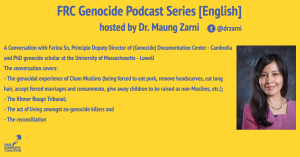
A Conversation with Farina So, Principle Deputy Director of (Genocide) Documentation Center – Cambodia

A Conversation with Farina So, Principle Deputy Director of (Genocide) Documentation Center – Cambodia and PhD genocide scholar at the University of Massachusetts – Lowell The conversation covers: – The genocidal experience of Cham Muslims (being forced to eat pork, remove headscarves, cut long hair, accept forced marriages and consummate, give away children to be raised as non-Muslims, etc.); – The Khmer Rouge Tribunal; – The act of living amongst ex-genocide killers and – The reconciliation Farina So is currently the Principal Deputy Director of the Documentation Center of Cambodia (DC-Cam), responsible for overall management, evaluation, and fundraising for DC-Cam.

ရခိုင်လူငယ်နှစ်ဦးနှင့် ဆွေးနွေးခန်း

FRC Genocide Podcast Series မြန်မာပိုင်းအစီအစဉ်မှာ ရခိုင်လူငယ်နှစ်ဦးဖြစ်တဲ့ ကိုခိုင်မြတ်နိုင်၊ ကိုမောင်ခိုင်သိန်း တို့က ပါဝင်ဆွေးနွေးထားပါတယ်။ ရိုနေဆန်းလွင် က စီစဉ်တင်ဆက်ထားပြီး၊ ဒီဆွေးနွေးခန်းမှာ – – ရခိုင်နဲ့ ရိုဟင်ဂျာပြဿနာက ဘာကို အခြေခံနေသလဲ – Arakanese ဆိုတဲ့ခေါင်းစဉ်အောက်မှာ အာရ်ကာန်ဒေသရဲ့ လူမျိုးစုတွေအားလုံး စည်းလုံးညီညွတ်လာဖို့ – ရိုဟင်ဂျာဂျီနိုဆိုက်လို နောက်ထပ်မဖြစ်ဖို့ ဘယ်လိုကာကွယ်ကြမလဲ – ကိုဗစ်-၁၉ ကို အကြောင်းပြပြီး လူမျိုးရေးမုန်းတီးမှုဖန်တီးနေတာတွေကို တိုက်ဖျက်ဖို့ — စတာတွေကို စုံစုံလင်လင် ဆွေးနွေးထားတာကို နားဆင်နိုင်ပါပြီ။

A conversation with Haider Khan, a Mumbai-based Indian photographer with director’s mind

Haider Khan is a Mumbai-based Indian “photographer with director’s mind, who sees the world as a cinematic canvas.” He strives to help mainstream the concerns for Rohingya genocide survivors through his dramatized film “Rohingya People from Nowhere”, moving away from the documentary approach towards one of the most heart-wrenching tales of genocidally persecuted Myanmar’s Rohingya people. This is his first-ever film. The conversation covers: The director’s choice to marry realism and “glamourization” in order to mainstream Rohingya’s talesThe cast of charactersUniversal humanism and human compassionThe director’s message to the Rohingyas

Join the movement by wearing BLACK in solidarity on Saturday, 13 June 2020 and remember to share your photos and messages of solidarity with us on twitter @ProtectRohingya & on instagram @protecttherohingya using the Hashtag: #Black4Rohingya

Join the movement by wearing BLACK in solidarity on Saturday, 13 June 2020 and remember to share your photos and messages of solidarity with us on twitter @ProtectRohingya & on instagram @protecttherohingya using the Hashtag: #Black4Rohingya The Rohingya have suffered four decades of systematic persecution in their home country Myanmar. They are denied citizenship, freedom of movement, access to education and health services; they have been subject to land confiscations, arbitrary arrests, forced labour, extortion, torture, rape, mass killings and other forms of collective punishment. Since 25 August 2017, a million Rohingya were forced to flee genocide over the border