
“THEY TRIED TO KILL US ALL” – Atrocity Crimes against Rohingya Muslims in Rakhine State, Myanmar


By Maung Zarni and Natalie Brinham | Published by Middle East Institute on November 14, 2017 Sectarian-based conflicts — or at any rate, spasms of intercommunal violence characterized as such — are certainly not new. Nor is Iraq or, for that matter, the Middle East as a whole, the only locus of conflict depicted as being sectarian in nature, as the disturbing events in Burma/Myanmar, as well as in the Central African Repubic (CAR) and Nigeria clearly illustrate. With increasing frequency, media accounts of the civil war in Syria describe it in sectarian terms and report that the violence there
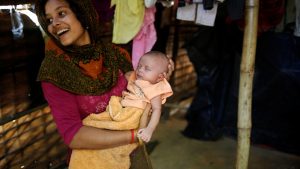
By Krithika Varagur | Published by The Atlantic on November 14, 2017 The sheer number of Rohingya Muslims fleeing genocide in Burma—over 10,000 per day since late August—has become too huge to ignore. It’s the reason why U.S. Secretary of State Rex Tillerson will visit Burma on Wednesday. In his briefings on the crisis, Tillerson will likely encounter another question of numbers: the claim, voiced often by Burmese officials and hardline Buddhist monks, that Rohingya Muslim “overpopulation” threatens their country’s Buddhist majority. “The population growth of Rohingya Muslims is 10 times higher than that of the Rakhine [Buddhists],” said Win



By Natalie Brinham | Published by Open Democracy on September 26, 2018 Demanding the ‘right of return’ for Rohingya eases the way for countries to forcibly repatriate them back to Myanmar. Again. Even as Rohingya in Bangladesh watch their villages burn across the Naff river, even as trapped and internally displaced Rohingya desperately seek safe passage around the road blocks and landmines to Bangladesh, all talk it seems is focused on returning Rohingya to Myanmar. As Bangladesh’s prime minister Sheik Hasina opens the door to 400,000 newly-arrived Rohingya victims of “ethnic cleansing” with one hand, she shakes her fist with

Published by reliefweb on July 5, 2017 FOOD SECURITY: In line with the previous remote emergency assessments, the survey confirmed a worsening of the food security situation in already highly vulnerable areas after the October 2016 incidents and subsequent security operations. Nearly one third of the population was severely food-insecure and in need of humanitarian assistance. Only 14 percent of women achieved minimum dietary diversity and none of the children met the minimum adequate diet. Income opportunities were scarce and households could not access sufficient food to cover their needs. About half of the markets were not functioning or were

By Alice Cowley and Maung Zarni | Published by Middle East Institute on April 20, 2017 Sectarian-based conflicts — or at any rate, spasms of intercommunal violence characterized as such — are certainly not new. Nor is Iraq or, for that matter, the Middle East as a whole, the only locus of conflict depicted as being sectarian in nature, as the disturbing events in Burma/Myanmar, as well as in the Central African Repubic (CAR) and Nigeria clearly illustrate. With increasing frequency, media accounts of the civil war in Syria describe it in sectarian terms and report that the violence there